
Run logistics as one connected operation.
Connect orders, shipments, loads, drivers, carriers, stops, telemetry, exceptions, and proof of delivery in one governed operating layer.

From order to delivery. With the operating context intact.
A shipment delay, missed appointment, temperature excursion, or driver constraint should not become a series of disconnected phone calls. LogisticOps keeps the freight lifecycle, execution events, and response path connected.
One response flow
- Detect the event through telemetry, carrier, WMS, ELD, or operator input.
- Understand the affected load, stop, appointment, cargo, and customer commitment.
- Respond through a governed exception, execution, or replan workflow.
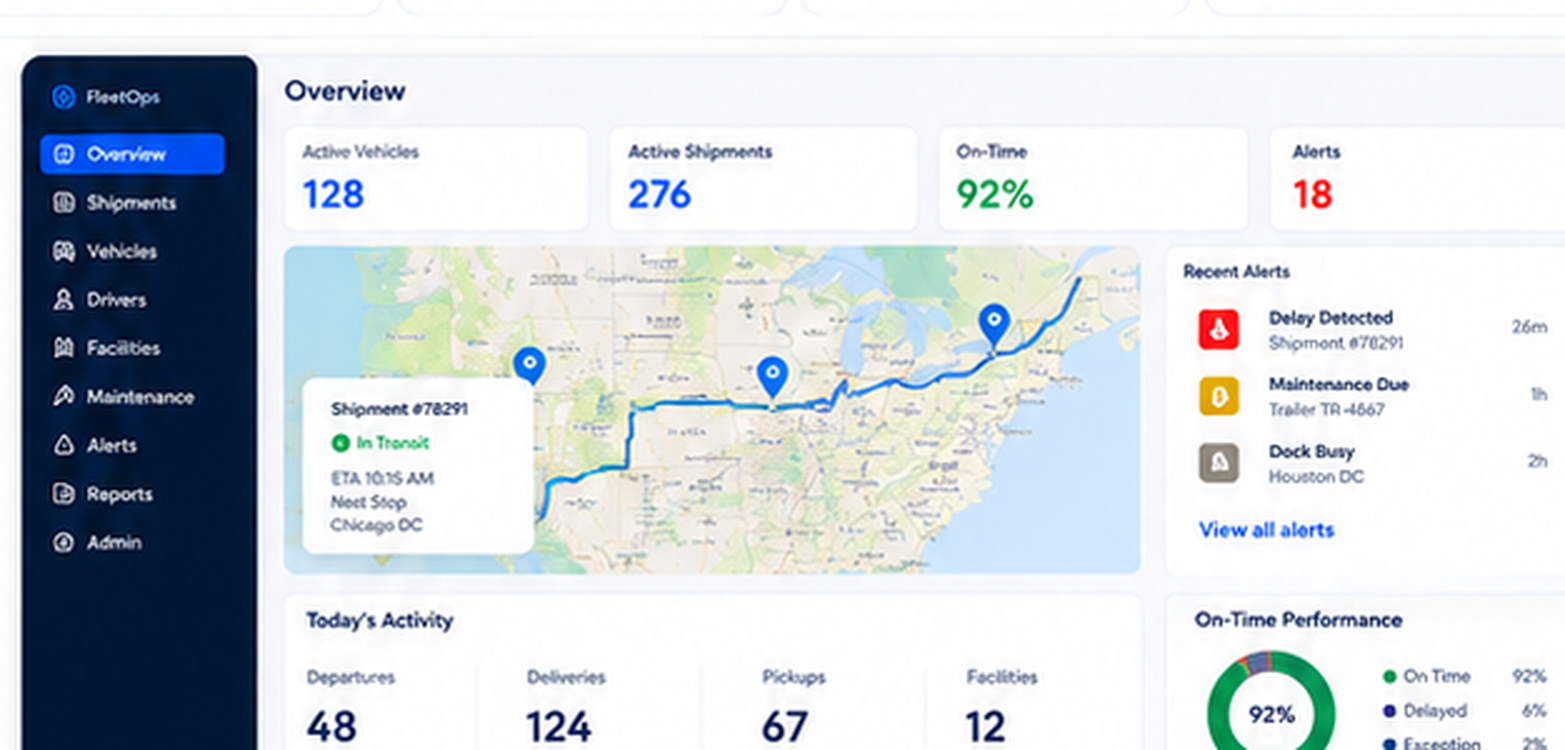
A freight operating foundation built for planning, execution, and accountability.
Plan freight, execute loads, respond to exceptions, and keep every handoff tied to the same operational picture.
Orders, shipments, and loads
Create and connect freight obligations, cargo, stops, appointments, equipment requirements, and resource assignments.
Execution and milestones
Dispatch loads, arrive and check in at stops, complete pickup and delivery, capture discrepancies, and preserve proof of delivery.
Exceptions and response
Raise, review, mitigate, and resolve operational exceptions with severity, ownership, resolution notes, and audit context.
Capacity and tendering
Qualify carriers, source capacity, issue tenders, accept or reject offers, confirm rates, and support fallback decisions.
Package and cargo verification
Use barcode-aware manifests, scan validation, quantity controls, corrections, overrides, and scan history at the load and stop.
Planning and replanning
Evaluate route feasibility, identify appointment pressure, propose plan revisions, require approval, and activate governed changes.
Connect logistics work to the systems already moving the operation.
FleetMaster
Give planners and supervisors a shared view of loads, routes, carriers, exceptions, maintenance context, and operational status.
Explore FleetMaster →FleetPilot
Carry route, task, stop, scan, and completion context into the mobile execution layer for drivers and field teams.
Explore FleetPilot →Tracker and integrations
Ingest position, temperature, carrier, WMS, ELD, CSV, and communication signals through a connected integration boundary.
Explore integrations →Keep freight, facilities, drivers, carriers, and operational signals connected.
Bring together carrier updates, warehouse management system (WMS) dock check-ins, telematics, ELD signals, package scans, appointments, and operator actions so logistics teams can see what is happening and respond with context.
Connected operating inputs
- Orders, shipments, loads, stops, cargo, appointments, and assigned resources.
- Carrier, warehouse management system (WMS), telematics, ELD, CSV, email, SMS, and manual status inputs.
- Exceptions, plan revisions, proof of delivery, package scans, and operational audit.

Bring your logistics model. Let’s make it work better together.
Every logistics operation has its own workflows, priorities, and expectations. Bring us the way your operation works today, and we’ll work with you to connect the right people, systems, and actions in one operating picture.
Start with what matters to you
- Show us how orders, shipments, loads, stops, and deliveries move through your operation.
- Identify the delays, handoffs, and exceptions your teams need to manage every day.
- Shape a connected operating model around the outcomes your customers and teams expect.